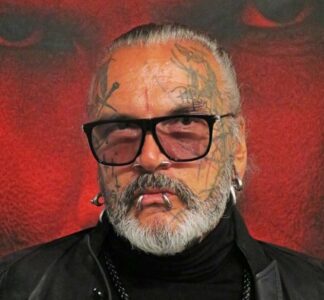
Sven Marquardt
Status: Pending
Peter Foy - September 7, 2024
Last Edited: August 7, 2026
Contributors: Peter J. Foy
Sven Marquardt is a photographer, bouncer, and cultural icon famed as the gatekeeper of Berlin's legendary nightclub Berghain. Known for his striking appearance and strict door policy, he embodies the club's enigmatic aura. As a photographer, his work captures the raw energy and subversive spirit of Berlin's underground scene, often exploring themes of identity, urban decay, and rebellion. His persona exudes an air of mystery, authority, and artistic sensibility, reflecting his integral role in shaping the city's nightlife landscape.
ENERGETICS
STYLES
EMOTIONS
Eu:
Eg:
FA:
Eg:
FA:
SIGNAL DATA
Fi/Te
Ca-1 Taut Nasolabial Area:
Ca-2 Vertical Snarling Smiles:
Ca-3 Four Point Pulling:
Ca-4 Wobbling Lips:
Ca-5 Asymmetrical Smirks:
Ca-6 Sassy Movements:
Ca-7 Plateau Velocity:
Ca-8 Nasal-Breathy Voice:
Ca-9 Grasping Hands:
Ni/Se
Gr-1 Taut Preseptal Area:
Gr-2 Lax Pretarsal Area:
Gr-3 Taut Outer Edges:
Gr-4 Intense Scowling:
Gr-5 Pointed Eye Toggles:
Gr-6 Eye-Head Parallel Motion:
Gr-7 Grounding Effect:
Gr-8 Bodily Awareness:
Ti/Fe
Ms-1 Lax Nasolabial Area:
Ms-2 Horizontal Curtain Smiles:
Ms-3 Two Point Pulling:
Ms-4 Symmetrical Lips:
Ms-5 Emotional Neutralization:
Ms-6 Coordinated Movements:
Ms-7 Parabolic Velocity:
Ms-8 Diaphragm-Faint Voice:
Ms-9 Puppeteer Hands:
Ne/Si
Su-1 Lax Preseptal Area:
Su-2 Taut Pretarsal Area:
Su-3 Lax Outer Edges:
Su-4 Concerned Scowling:
Su-5 Brushstrokes Eye Toggles:
Su-6 Eye-Head Trailing Motions:
Su-7 Levity Effect:
Su-8 Quirky Skits:
Unguarded
Eu-1 Responsive Nodding:
Eu-2 Polite Smiling:
Eu-3 Bashful Body Movements:
Guarded
Eg-1 Upset Mouth Tension:
Eg-2 Assertive Pushing:
Eg-3 Stern Expressions:
Fallen Affect
FA-1 Fallen Affect:
CAREERS
MOTIFS
Acute PerceptionAesthetics, Beauty and ArtworksArtistic Expression and CreativityArtwork and Solitude as TherapyBalancing Masculine and Feminine EnergiesBody Language and CommunicationContradiction and ParadoxCreative Production and DirectingCultural Commentary and SociologyDark AestheticsDark and Atmospheric SensationsFame and Interpersonal InfluenceFashion and StyleFreedom of ExpressionGrounded RealismHedonism and Self-IndulgenceIcon and BrandIdentity ExplorationIndividualism and NonconformityIsolation and BelongingPersonal Narratives and MemoriesPhotographyPunk RockReal-Life ExperiencesRebellionReclusiveness, Shyness and PrivacySelf AuthenticitySensuality and SexualityTattoos and Body ModificationsTechnoTough Persona and Bad-Boy ImageUnderground SubcultureVisual Art and Installations
DEMOGRAPHICS
SIMILAR PEOPLE


QUOTES

East Berlin was dominated by punk and new wave in the early 80s. At least for us, the so-called ‘bohemians of Prenzlauer Berg’, residents of the local scene of creative young people who took part in the refusal of dictatorship in particular. My camera became a stylistic device in my – in our – attitudes towards life. I think that is something which has remained the same, even today
There are a few fundamentals in my photography. I still work almost completely analogue, always with daylight, my priority being black and white (but not only), and I never simply walk through the town with my camera, searching for the right motive or moment. I have walked around Berlin a lot, looking for places, lighting, and inspiration. But my camera isn’t there. Sometimes I make notes and take a few photos on my iPhone as an outline.
After the wall fell, East Berlin was almost anarchistic. Companies just didn’t exist anymore. I’d been shooting for Sibylle, an East German fashion magazine, but that kind of work really dried up. At the same time, though, almost anything was possible. You could break into empty apartment buildings or empty warehouses and just do what you wanted: install a makeshift bar, open up a club, celebrate and party until dawn. It was this phenomenal, fascinating, vibrant feeling. I was completely sucked into it.
Berlin was on the way to becoming a metropolis. This lockdown was a hopefully temporary emergency stop for all of us to reflect on that. I had started to film daily recurring rituals in short videos with my iPhone: the ticking of the clock, flowers that fade, candles that burn down, the full moon in the night sky, as well as taking photos. Time documents beauty and decay in a real way, but the situation on Berlin’s streets was surreal at the same time. We are now returning to a bit of normalcy. But the changes in this city will linger with me over the decades.
I have always studied people. Maybe that’s the connection between working by the door and as a photographer.